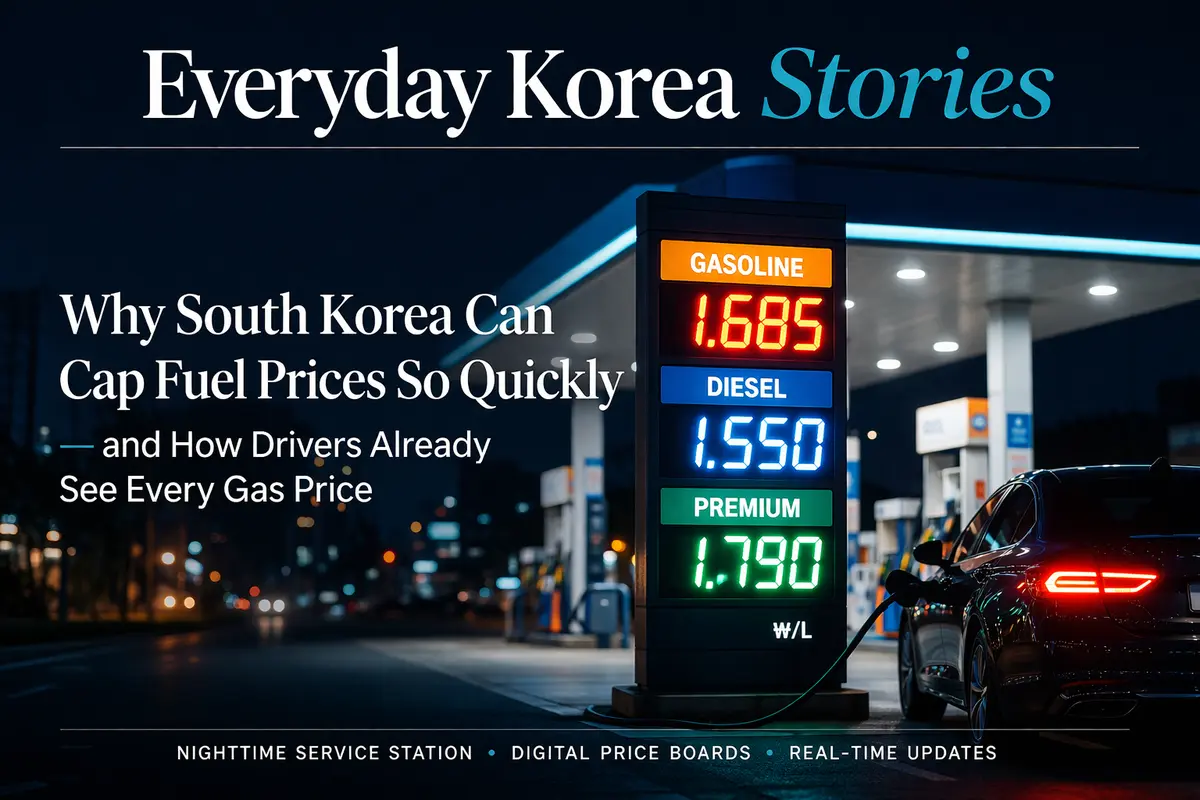
Late at night in Seoul, a driver pulls into a gas station without slowing much to think. The price was already decided before the car even turned the corner.
On the navigation app, several stations had appeared along the route—each with its price clearly listed. One was slightly cheaper. That was enough.
By the time the driver arrives, the decision has already been made.
A Policy That Begins at Midnight
At midnight on March 13 in South Korea, a temporary fuel price cap takes effect.
The timing is precise. The policy does not phase in gradually or wait for extended adjustment periods. It begins immediately, reflecting a pattern often seen in Korean policymaking.
Changes that affect everyday costs—transportation, energy, housing—tend to move quickly from announcement to implementation.
Fuel prices, in particular, sit close to daily life. They affect delivery services, taxi fares, commuting costs, and the broader flow of goods through the city. Even small increases ripple outward.
That sensitivity is part of what makes fast intervention possible—and expected.
A Market Where Prices Are Already Visible
What makes this speed possible is not just policy.
It is infrastructure.
South Korea operates a nationwide system that tracks fuel prices across thousands of gas stations. This platform, known as Opinet, collects and displays pricing data in near real time.
Drivers can see it.
Journalists can see it.
Policymakers can see it.
The fuel market is not hidden behind local variation. It is already visible at a national level.
Navigation Apps Turn Data Into Decisions
The system becomes even more practical once it reaches everyday tools.
Navigation apps in Korea often display gas station prices directly along a route. A driver planning a trip might see several nearby stations, each with slightly different numbers. The comparison happens before the car even moves.
Choosing where to stop becomes a simple, almost automatic decision.
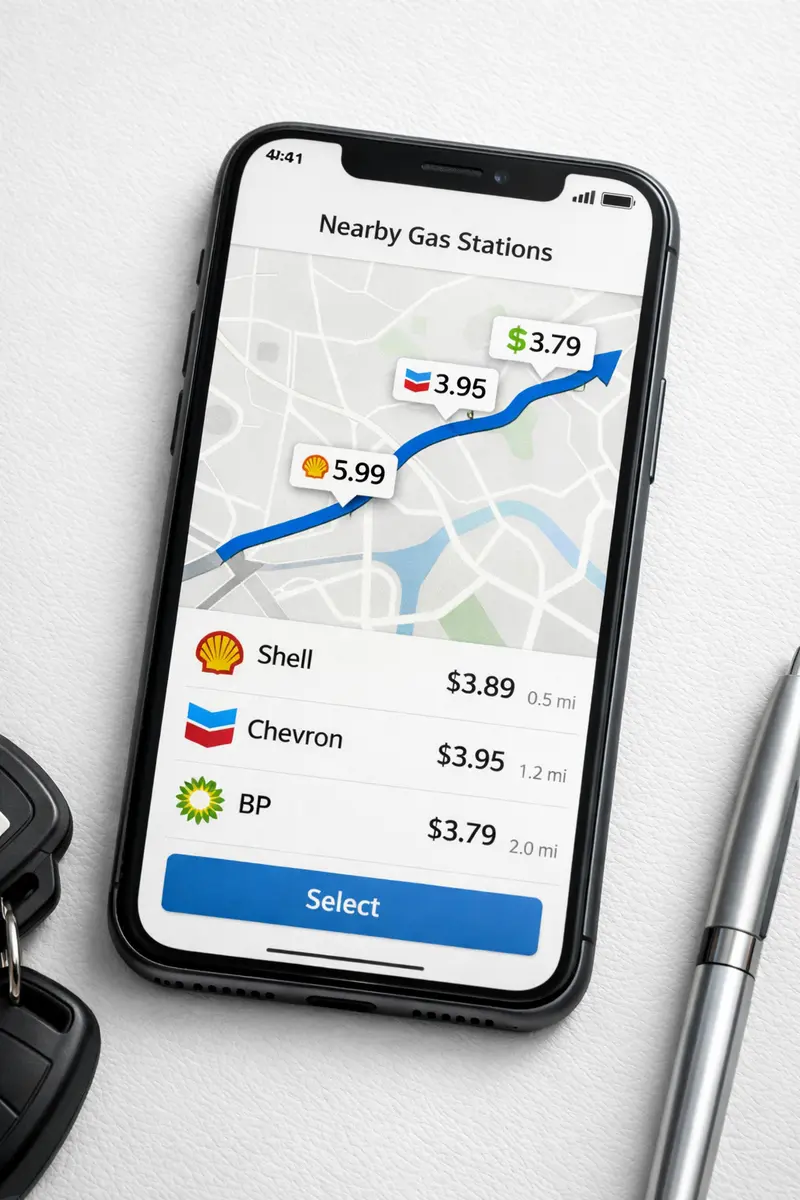
This integration changes behavior.
Drivers are not guessing. They are selecting.
When Prices Move, Everyone Notices
Because prices are already visible, changes spread quickly.
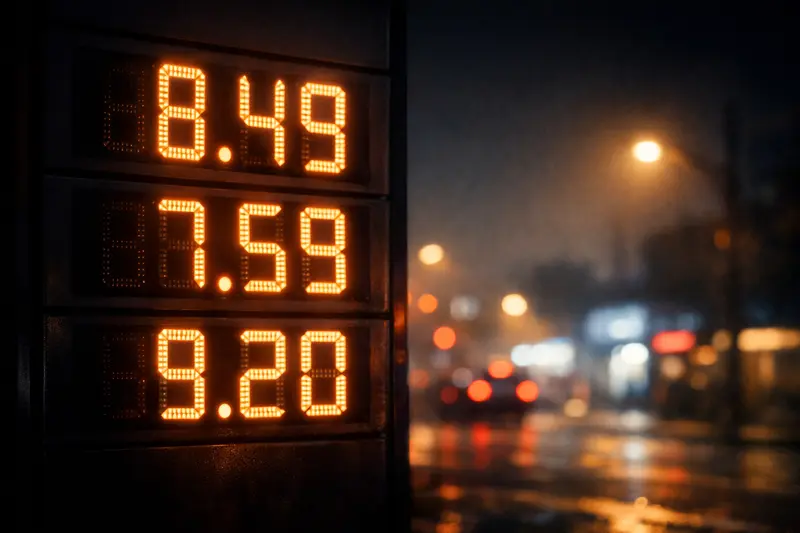
If fuel costs begin to rise, the shift appears immediately across multiple platforms. News outlets report the trend. Online communities compare prices. Drivers share screenshots from apps or roadside displays.
The reaction is not delayed.
It happens in real time.
This visibility creates a different kind of pressure. When prices rise sharply, the public already knows. The data is not hidden or abstract—it is part of everyday experience.
A Government That Responds in Real Time
In that environment, policy moves differently.
The fuel price cap introduced in March is not a permanent restructuring of the market. It is a temporary intervention, designed to slow rapid increases during a volatile period.
This approach appears in other areas as well.
When housing prices surge, policies adjust quickly. When transportation costs rise, subsidies or controls may appear. These measures are often short-term, focused on stabilizing conditions rather than reshaping them entirely.
Fuel prices are especially sensitive because they connect so many parts of daily life.
Why This Feels Different to American Drivers
For many American readers, the most surprising part is not the price cap itself.
It is the visibility.
In the United States, drivers often rely on roadside signs or third-party apps that collect data from individual users or stations. The information can vary in accuracy or timing.
In South Korea, the system is more centralized.
Fuel prices are part of a structured, nationwide reporting network. Navigation apps pull directly from that data, turning it into something drivers use automatically.
Everyone is looking at the same numbers.
A System Built on Shared Information
This creates a different kind of environment.
The government, the media, and the public are not operating with separate layers of information. They are responding to the same data at roughly the same time.
When prices shift, the system reacts.
Not just through policy announcements, but through everyday decisions—drivers choosing one station over another, apps highlighting cheaper routes, conversations forming around visible numbers.
A Small Window Into a Larger Pattern
The fuel price cap itself is temporary.
But the system behind it is not.
It reflects a broader pattern in Korean infrastructure: information flows quickly, data is shared openly, and digital tools connect that information directly to daily behavior.
A driver checks a route.
Prices appear.
A decision is made.
And somewhere in the background, the same numbers are shaping policy discussions, news coverage, and public response—all at once.
—
Frequently Asked Questions
Q: What is the South Korean fuel price cap introduced in March?
Answer: It is a temporary policy designed to limit how quickly gasoline and diesel prices can rise during a period of global oil market volatility. It took effect at midnight on March 13 Korea time.
Q: Can drivers in Korea really see gas prices before arriving?
Answer: Yes. Navigation apps commonly display real-time fuel prices from nearby stations and along planned routes, allowing drivers to compare options before driving.
Q: Does the Korean government always control fuel prices?
Answer: No. Prices generally follow market conditions. However, during periods of rapid increases, temporary measures may be introduced to stabilize costs.