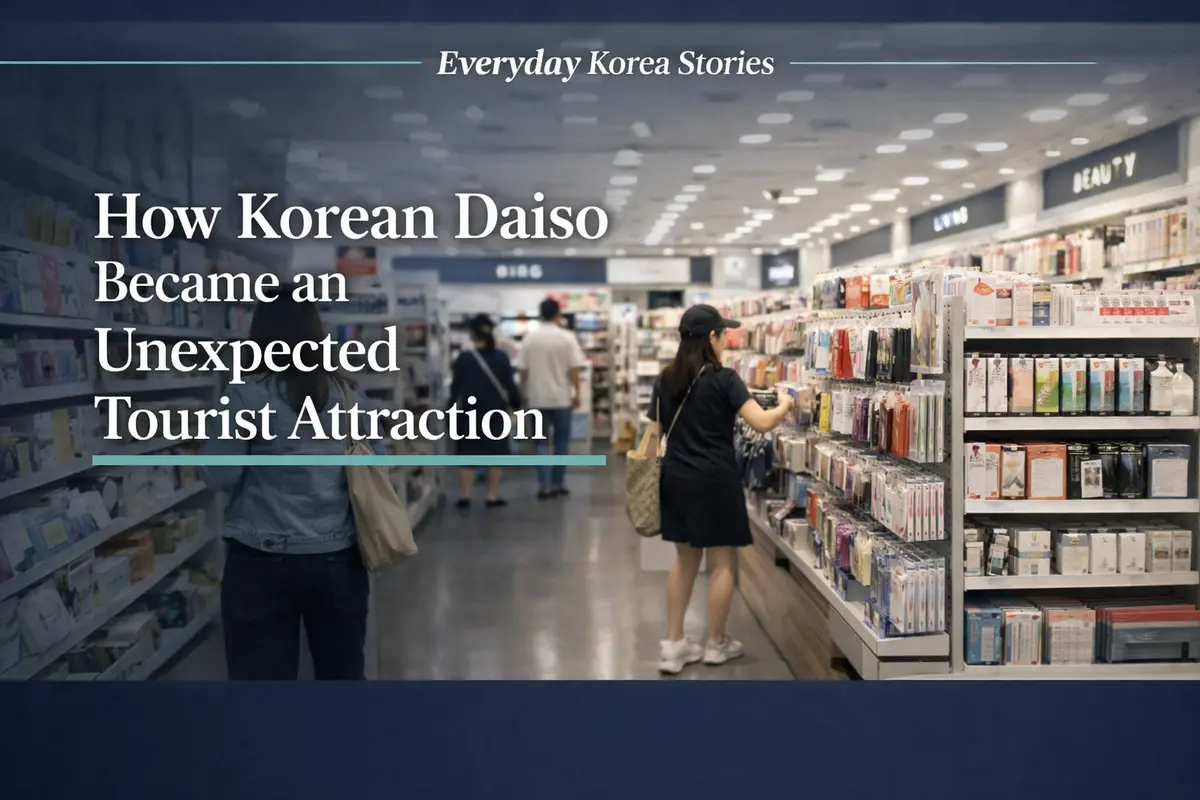
A narrow aisle inside a brightly lit Daiso in central Seoul is suddenly congested—not with locals comparing storage boxes, but with visitors holding their phones up at eye level. A couple speaks in Japanese while scanning rows of pastel stationery. Nearby, a group of tourists debates which kitchen gadgets to bring home, turning each item over as if it carries cultural meaning. The shelves are immaculate. The lighting is uniform. Even the price tags feel part of a system.
What looks like an ordinary discount store has quietly become a destination.
The Rise of Korean Daiso as a Travel Stop
The primary keyword—Korean Daiso—doesn’t typically appear in travel guides alongside palaces or street food markets. Yet, for many visitors to Seoul, it has become a recurring stop. Not because it offers rare goods, but because it offers something more subtle: a compressed version of everyday Korean life.
Tourists don’t come here to “shop” in the traditional sense. They come to observe.
A single store contains hundreds of objects that reflect how people in Korea organize their homes, prepare food, store belongings, and even decorate their desks. The appeal isn’t just affordability—it’s the system behind the products. Items feel designed with a specific living pattern in mind, one that visitors begin to recognize as distinctly Korean.
This is where retail begins to overlap with cultural experience.
What Makes Korean Daiso Feel Different
At first glance, Daiso might resemble a dollar store in the United States. But the resemblance fades quickly once you move beyond the entrance.
Precision Over Variety
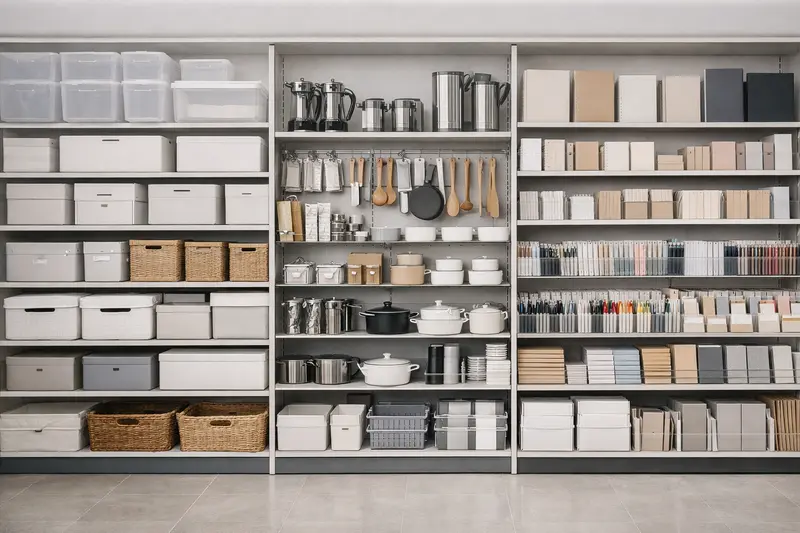
In many Western discount stores, shelves can feel chaotic—products overlap, categories blur, and the experience leans toward abundance. Korean Daiso operates differently. The layout is segmented with almost architectural clarity.
Storage containers are grouped not just by type, but by function within small living spaces. Kitchen tools are arranged with an understanding of compact cooking environments. Even stationery sections reflect Korea’s culture of neatness and visual consistency.
This precision is not accidental. It reflects a broader pattern seen across Korean retail environments, where usability and spatial efficiency are prioritized.
Standardized Pricing, Predictable Experience
Most items in Korean Daiso fall within a tight price range—often between 1,000 and 5,000 KRW. This pricing structure removes decision fatigue. Shoppers don’t hesitate; they experiment.
For visitors, this creates a different kind of shopping behavior. Instead of evaluating cost versus value, they explore freely. The store becomes less about transactions and more about discovery.
It’s a system designed for flow.
Why Tourists Are Drawn to Everyday Retail Spaces
There’s a shift happening in how people travel. Increasingly, visitors are less interested in curated attractions and more interested in observing how daily life operates.
Korean Daiso fits perfectly into this shift.
Unlike traditional tourist sites, it is not staged. There are no explanations, no guided narratives. What you see is what locals use. That authenticity creates a sense of access—like briefly stepping into someone else’s routine.
This pattern can also be seen in places like convenience stores or large supermarkets, where everyday infrastructure becomes part of the travel experience.
In this context, Daiso functions almost like a cultural archive—except everything is still in use.
The System Behind the Products
To understand why Korean Daiso feels distinctive, it helps to look at the environment it serves.
High-Density Living Shapes Product Design
Seoul is a city of apartments. Space is limited, and storage is often integrated into furniture or small designated areas. This constraint influences product design across the retail sector.
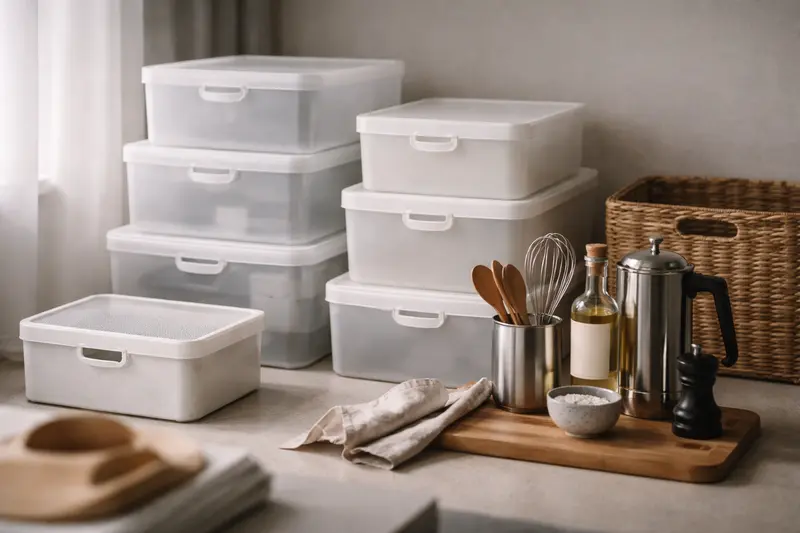
Daiso’s products reflect this reality. Collapsible containers, stackable drawers, and multi-purpose tools are not just convenient—they are necessary.
Visitors may initially see these items as clever or aesthetically pleasing. But for locals, they are functional responses to spatial limitations.
A Culture of Visible Order
Korean homes often emphasize visible organization. Items are not just stored—they are arranged. This aesthetic preference carries into retail environments.
Daiso doesn’t just sell objects; it presents a model of order. The store itself becomes a demonstration of how things should be arranged.
For tourists, this creates a subtle but powerful impression. The store feels calm, even when crowded. The system is legible.
Fast Product Turnover and Trend Sensitivity
Korean retail moves quickly. Seasonal items rotate frequently, and product designs adapt to emerging trends—whether it’s minimalist aesthetics or character-themed goods.
Daiso operates within this rhythm. It’s not static. Regular visitors notice changes in inventory, which keeps the experience dynamic.
This responsiveness mirrors broader patterns in Korean consumer culture, where trends are adopted and iterated rapidly.
When Shopping Becomes Observation
Inside Korean Daiso, it’s common to see visitors taking photos—not of themselves, but of shelves.
This behavior might seem unusual, but it reflects a deeper shift. The store is not just a place to buy things; it’s a place to study how things are done.
What kind of lunch containers do people use?
How are cables organized?
What does a “basic” kitchen tool look like in Korea?
Each object answers a small question about daily life.
Over time, these small observations accumulate into a broader understanding of the culture—not through explanation, but through exposure.
A Store That Explains a Society
Korean Daiso does not present itself as cultural. It doesn’t try to explain Korea.
And yet, it does.
Through its layout, its products, and its pricing, it reveals how a dense, fast-moving urban society organizes itself. It shows how efficiency becomes aesthetic, how constraints become design principles, and how everyday objects carry the imprint of a larger system.
For visitors, this is what makes the experience memorable. Not the items themselves, but what they represent.
A dollar store, reinterpreted as a window into how a city lives.
—
Frequently Asked Questions
Q: Why do tourists visit Korean Daiso instead of traditional attractions?
Answer: Many travelers are increasingly interested in observing everyday life rather than only visiting landmarks. Korean Daiso offers insight into how people organize their homes and routines, making it feel like an unfiltered cultural experience.
Q: Is Korean Daiso different from Daiso in other countries?
Answer: Yes, the Korean version has developed its own identity, shaped by local living conditions and consumer behavior. Product design, store layout, and item selection often reflect Korea’s high-density urban lifestyle.
Q: What should first-time visitors look for when entering a Korean Daiso?
Answer: Instead of focusing on what to buy, it helps to observe how items are categorized and displayed. Pay attention to storage solutions, kitchen tools, and small daily-use items—they often reveal how everyday life is structured in Korea.