Right now in South Korea, something interesting is happening.
Across the country, people are moving—not randomly, but with timing. From the southern coast to Seoul, families, couples, and groups of friends are traveling in waves, following something that cannot be held in one place.
Spring is unfolding.
But in Korea, it does not simply arrive.
It moves.
What Is Happening
Each year, spring in Korea begins quietly.
The first signal is not cherry blossoms, but plum blossoms—매화.
They appear earlier, often in southern regions like Gwangyang, where entire festivals are built around their arrival. Visitors walk through quiet valleys filled with pale blossoms, marking what feels like the true beginning of the season.
Then the tempo increases.
Cherry blossoms follow, moving northward like a visible wave. Cities like Busan and Jinhae host some of the most well-known festivals, where entire districts transform for a short window of peak bloom.
In Jinhae, streets are lined with stalls, bridges are crowded with visitors photographing falling petals, and train tracks become iconic viewing spots framed by blossoms overhead.
Further north, places like Gyeongju and Seoul take their turn.
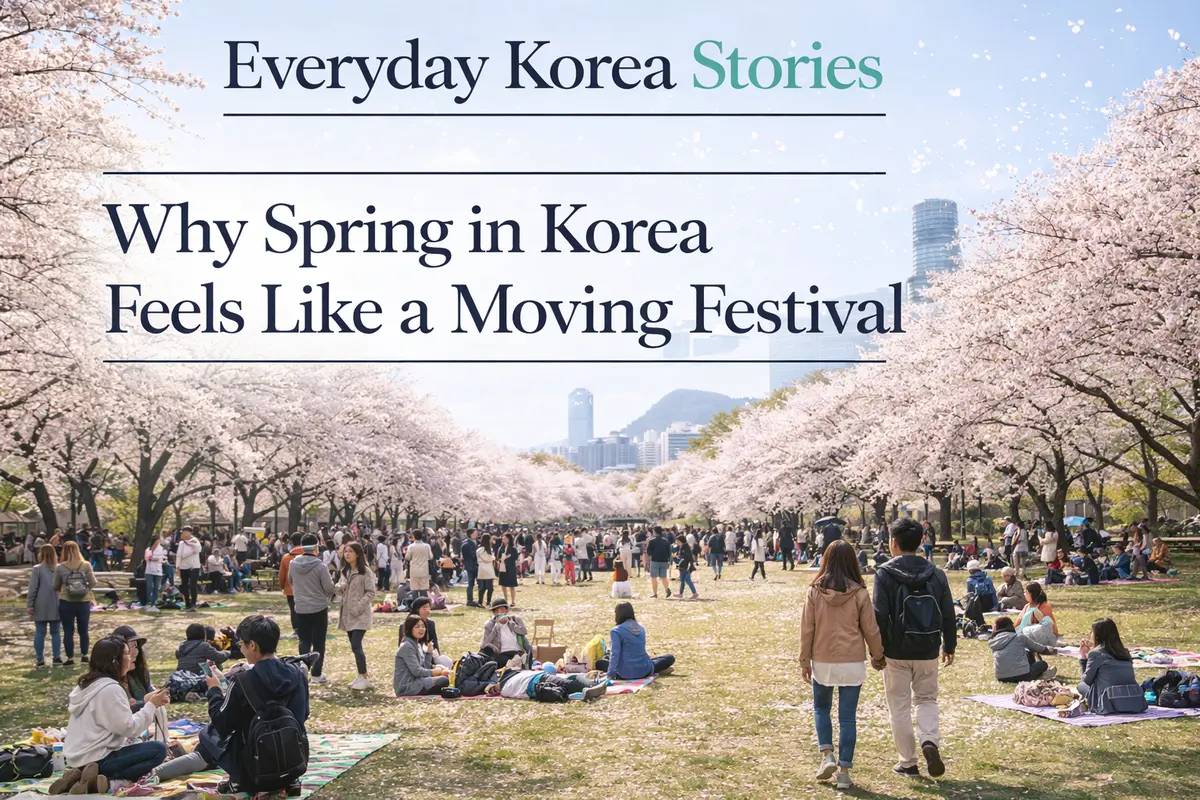
In Yeouido, one of Seoul’s most famous cherry blossom locations, roads are closed to traffic. People walk freely under rows of trees, while vendors and performers fill the surrounding space. It is part park, part festival, part temporary transformation of the city.
This sequence continues for weeks.
Not in one place—but across the entire country.
Following the Bloom
In Korea, spring is not passively observed.
It is actively tracked.
Social media fills with updates: which city is at full bloom, which festival is just beginning, which location has already peaked. Short-form videos show real-time conditions. Online communities exchange advice on where to go next.
The information is detailed.
Not just “flowers are blooming,” but:
This region will peak on Saturday.
This festival is already crowded.
This hidden street is just starting.
People respond quickly.
A group might drive several hours to catch peak bloom in Jinhae. A couple in Seoul might wait a few days for Yeouido to reach its best moment. Others plan multi-stop trips, moving from one region to another as the season progresses.
Spring becomes something to follow.
The Nationwide Festival Effect
What makes this pattern distinctive is scale.
Each region hosts its own festival.
But together, they form something larger.
A continuous, moving series of events.
One weekend, highways heading south are filled with traffic toward early bloom regions. The next, the flow shifts toward central areas. Then finally, it concentrates in Seoul.
This creates a rhythm.
Not just of blooming—but of movement.
Families pack picnic mats and food. Couples coordinate photo spots. Friends plan routes across cities. Parking lots fill early. Train tickets sell out.
In some areas, local governments prepare for this surge.
Temporary stages appear. Street vendors line festival zones. Traffic control measures are implemented. Entire neighborhoods adjust to accommodate visitors.
But much of it still feels organic.
The crowds are not only attending an event.
They are responding to timing.
From Waiting to Chasing
This behavior may feel modern, but it reflects something much older.
In traditional Korea, scholars practiced *Gugu-sohan-do*—the “Chart of Nine-Nines Dissipating the Cold.”
They would draw 81 plum blossoms at the start of winter, coloring one each day.
By the time the final petal was filled, spring would arrive.
It was a quiet ritual of waiting.
A way to endure the cold while anticipating change.
Today, that waiting has transformed.
People no longer sit with a brush.
They watch maps.
They refresh updates.
They travel.
If the scholars of the past completed spring slowly on paper, modern Koreans complete it across space.
Through movement.
Through timing.
Through presence at the exact moment something blooms.
A System Built Around Timing
Spring in Korea is defined by its brevity.
A few days too early, and the flowers are not ready.
A few days too late, and they are gone.
This creates a shared awareness.
People do not simply notice the season.
They coordinate with it.
Work schedules shift slightly. Travel plans adjust. Entire weekends are planned around bloom timing.
This is where tradition and modern life intersect.
The patience of the past becomes the precision of the present.
Why This Feels Different to American Readers
For many American readers, seasonal change is gradual and dispersed.
In Korea, it is concentrated and synchronized.
Because the country is geographically compact, the bloom moves in a visible pattern. Because cities are dense, large crowds can gather quickly. Because digital platforms amplify information, coordination happens almost instantly.
The result is something different.
Spring becomes a shared, time-sensitive experience.
Not just something to notice.
Something to participate in.
The Feeling of a Moving Festival
Taken together, these patterns create something unusual.
Spring in Korea does not stay still.
It travels.
From plum blossoms in the south to cherry blossoms in the capital, each region becomes a temporary center of attention.
And then the focus shifts.
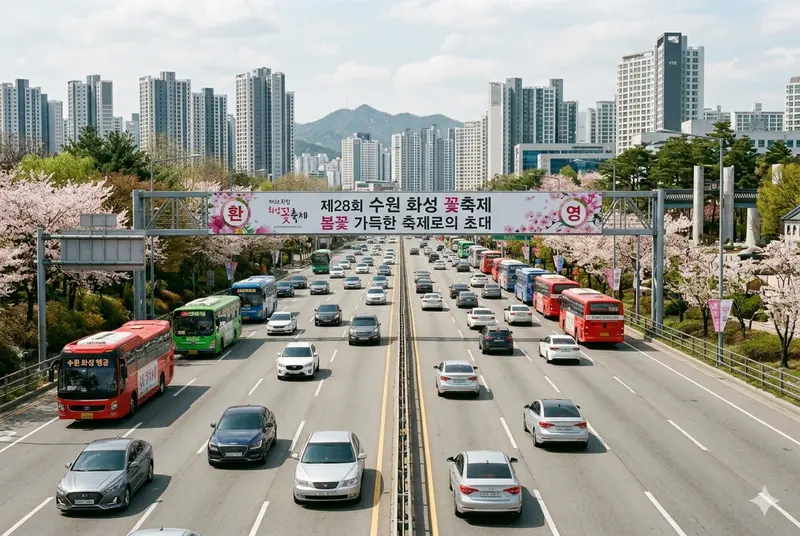
There is no single festival.
But the entire country begins to feel like one.
A Different Kind of Completion
The scholars of the past waited.
They filled in petals slowly, day by day.
Today, people move.
They collect moments instead of marking time.
They capture blossoms in different places, across different days, building their own version of the season.
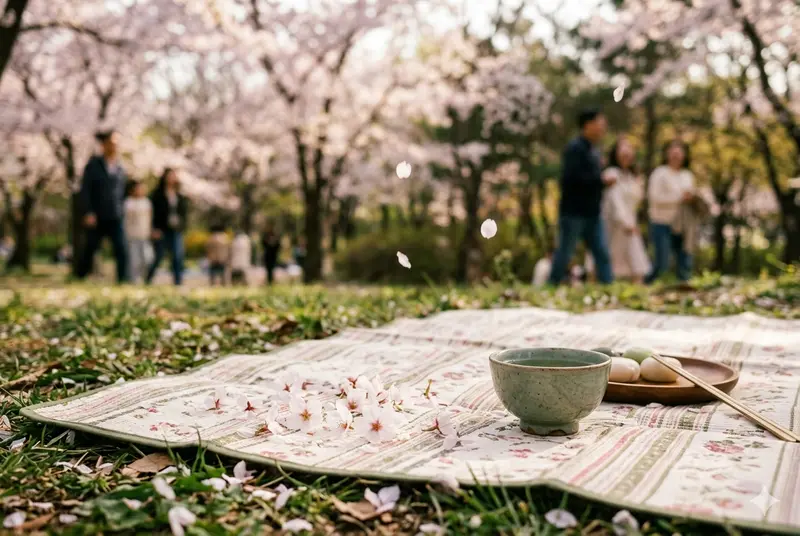
In a way, each person completes their own modern version of that old chart.
Not on paper.
But through experience.
And when the last petals fall, the movement stops.
The festival ends.
Almost as quickly as it began.
Frequently Asked Questions
Q: Why do Koreans travel so much during spring?
Answer: Because the bloom moves across regions and lasts only a few days in each place. To experience it at its peak, people often travel to where the timing is right.
Q: Are these flower festivals officially organized?
Answer: Many are, especially in places like Jinhae or Yeouido, but much of the activity is spontaneous. People gather wherever the flowers are at their best.
Q: What is Gugu-sohan-do, and how does it relate to today?
Answer: It was a traditional method of marking the passing of winter by coloring 81 plum blossoms over time. While the method has changed, the underlying attention to seasonal timing remains deeply embedded in Korean culture.