
Right now in South Korea, something interesting is happening.
The baseball season has begun again, and this year it started all at once—games across the country opening simultaneously at 2 PM on March 28 (1 AM ET / 10 PM PT, March 27 in the U.S.). From Seoul to Busan, stadiums are filling—not quietly, but with a kind of energy that feels less like a sporting event and more like something collective, rehearsed, and alive.
From the first pitch, the difference is immediate.

What Is Happening
At first glance, the game itself is familiar.
Nine innings. Pitchers, batters, fielders. The same structure seen in any professional baseball league.
But within minutes of entering a Korean stadium, the rhythm feels different.
The sound does not stop.
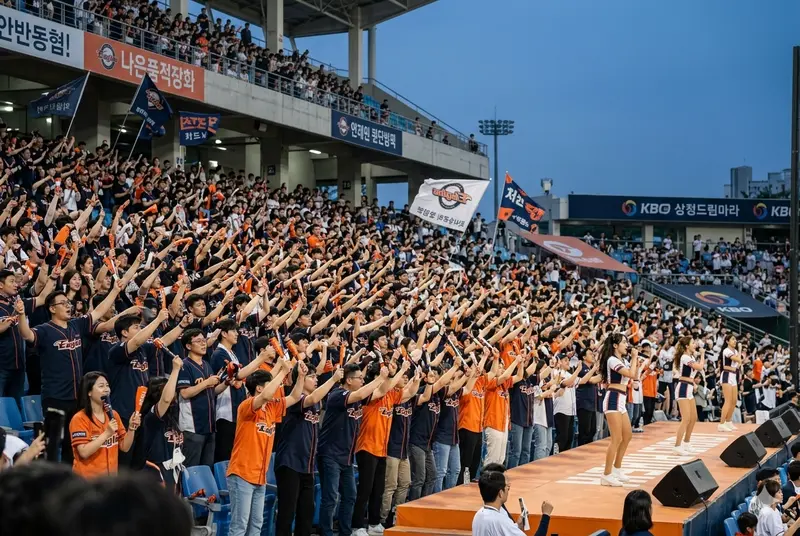
Each batter has a dedicated chant. Music plays between pitches. Cheerleaders lead synchronized routines. Entire sections of the stadium move together, responding to cues that seem invisible to outsiders.
There are no long stretches of silence.
Even routine moments are filled with noise, rhythm, and expectation.
The Bat Flip That Became a Statement
One of the first things that surprises American viewers is something small.
The bat.
In Major League Baseball, a dramatic bat flip after a home run can be seen as disrespectful, sometimes provoking retaliation.
In Korea, it is part of the moment.
Bat flips are expressive, sometimes exaggerated, and often anticipated. The reaction from the crowd is not restraint—it is amplification.
The gesture becomes part of the performance.
A Stadium That Moves Together
More striking than any individual moment is the coordination.
In many stadiums, cheering is reactive.
In Korea, it is continuous—and structured.
Fans do not simply respond to the game. They participate in it.
Each team has its own library of chants, songs, and rhythms. These are shared, repeated, and recognized across thousands of people.
When a batter steps up, the chant begins.
When a pitch is thrown, the noise shifts.
When a hit connects, the entire stadium reacts in sync.
For an American viewer, it can feel like something between a concert and a coordinated event—what some describe as “organized chaos.”
In Busan, a Single Word Fills the Stadium
Nowhere is this more visible than in Busan’s Sajik Stadium.
Here, one sound stands out.
“Ma!”
It is short. Sharp. Almost abrupt.
But when tens of thousands of fans shout it at once, it becomes something else entirely.
The moment usually comes when a pitcher glances toward first base.
In that instant, the stadium reacts.
“Ma!”
The word itself carries layered meaning—something between a warning and a challenge.
But what matters is not the translation.
It is the timing.
The entire crowd delivers it together, without instruction.
For an outsider, it feels like pressure—focused, collective, and immediate.
From Intimidation to Participation
What once might have felt intimidating has gradually become part of the experience.
Opposing fans respond. Variations emerge. The moment becomes interaction rather than confrontation.
The stadium is no longer just a place to watch.
It becomes a place to participate.
The Game Beyond the Field
There are also details that exist outside the game itself.
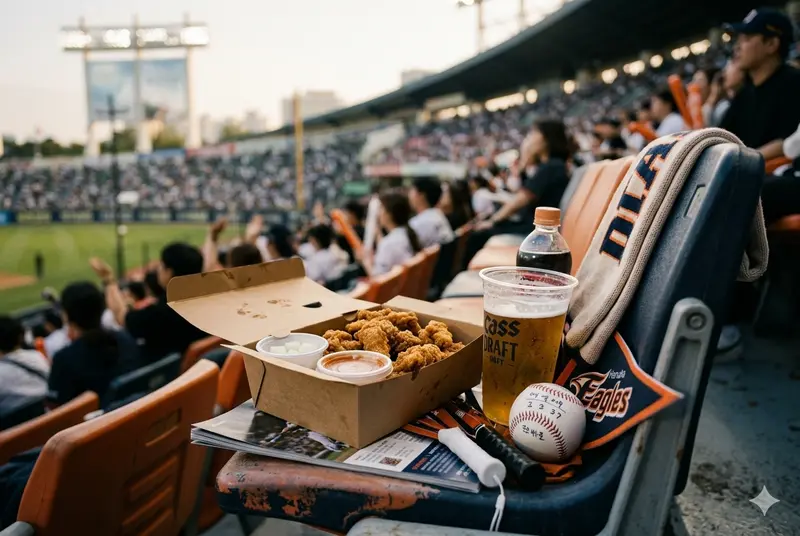
Food arrives not just from concession stands, but through delivery systems. Fans order meals directly to their seats—fried chicken, snacks, even full dishes—turning the stadium into an extension of everyday Korean life.
Why This Feels Different
For many American fans, baseball is associated with stillness.
Moments of quiet between pitches. A slower rhythm.
In Korea, that rhythm is different.
The game remains the same.
But the experience around it is continuous, layered, and shared.
There is less waiting.
More happening at once.
A Different Kind of Attention
Fans are not only watching the field.
They are watching each other.
Listening for cues. Joining in at the right moment. Becoming part of something larger than themselves.
The Three-Hour Experience
A baseball game lasts about three hours.
In Korea, those hours feel full.
Sound fills the gaps.
Movement fills the pauses.
Energy carries from one inning to the next.
What This Reveals
In South Korea, even a familiar structure can feel different when placed inside a different system.
Baseball remains baseball.
But the way it is experienced reflects something broader.
A tendency toward shared participation.
A comfort with collective expression.
A system where individuals move together without needing instruction.
For a few hours, inside a stadium, those patterns become visible.
Frequently Asked Questions
Q: Why does Korean baseball feel louder than MLB games?
Answer: Because cheering is continuous and organized. Fans actively participate throughout the game rather than reacting only at key moments.
Q: What does “Ma!” mean in Korean baseball?
Answer: It’s a short expression used by fans, especially in Busan, to pressure or challenge the opposing team. Its impact comes from thousands of voices delivering it at once.
Q: Is Korean baseball more about entertainment than sport?
Answer: The sport remains central, but the surrounding experience is more interactive and energetic, making it feel closer to a live event than a quiet game.