In a quiet apartment hallway, a door opens just slightly. A hand appears holding a small container—inside, a portion of freshly made food. The exchange is brief. A few words, a small nod, and the door closes again.
Later, the same container returns.
But not empty.

A Conversation Without Words
In Korea, shared dishes often move quietly between homes.
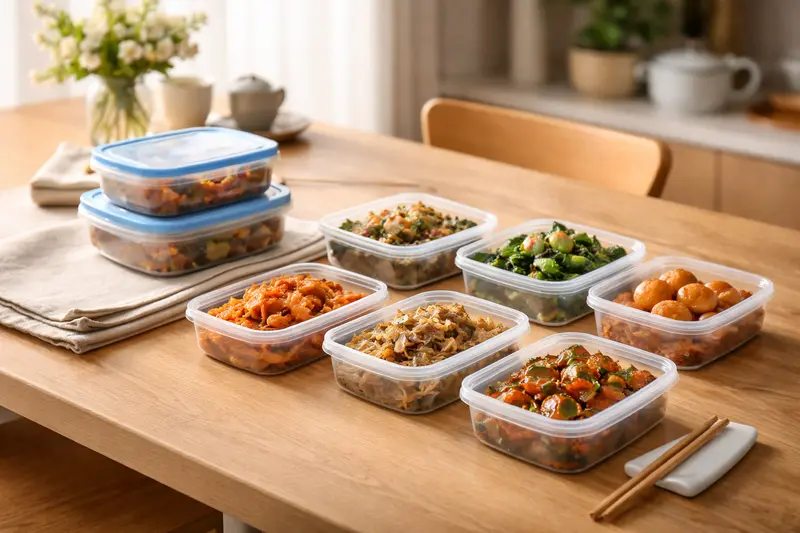
One household sends kimchi. Another returns the container with fruit. Days later, it might come back again holding something different. The container itself becomes part of the exchange—a small object traveling between kitchens.
It is not a formal system.
But over time, it becomes familiar.
The repeated movement builds a quiet rhythm. Even without long conversations, neighbors begin to recognize each other, not just as people living nearby, but as participants in a shared pattern.
Why Food Works So Well
Food carries meaning in Korean culture beyond simple nutrition.
Cooking for someone is widely understood as a form of care. A portion of food—no matter how small—communicates warmth in a way that does not require explanation.
It also fits naturally into daily life.
Meals in Korea often include multiple side dishes, and preparing them in slightly larger quantities is common. Sharing a portion does not require planning a visit or organizing a gathering. It can happen spontaneously, folded into routine.
Instead of scheduling time together, neighbors connect through what they are already doing.
Cooking becomes communication.
A Tradition That Has Shifted
This practice was once more common.
In older neighborhoods, where homes were closer and routines more predictable, food moved between households more frequently. People knew who lived next door, what they cooked, and when they were home.
Modern apartment living has changed that.
High-rise buildings house many residents, but the connections between them can be thinner. Busy schedules limit casual interaction. Doors stay closed more often.
The exchange of dishes still exists, but it appears less frequently.
When it does happen, it often reflects a closer relationship—neighbors who have taken the time to know each other.
The Unspoken Rule of the Returned Dish
Even as the practice has become less common, one small rule remains widely understood.
A container is not returned empty.
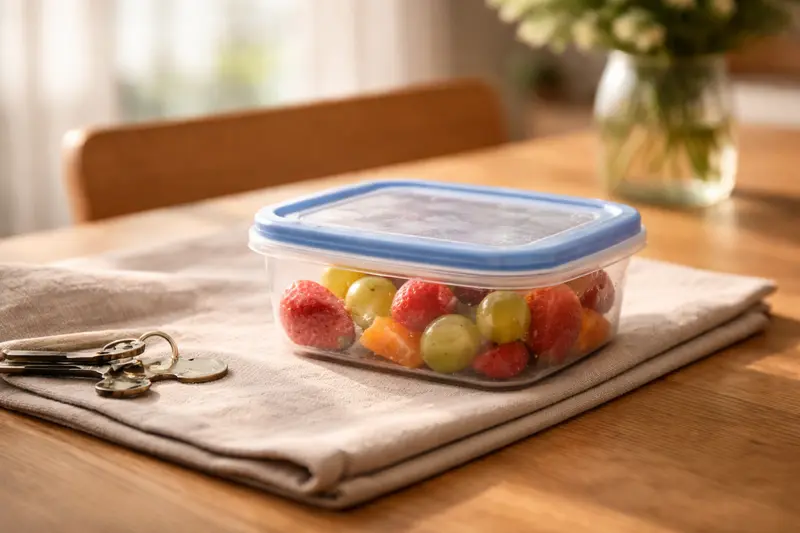
When someone receives food, the expectation is simple. At some point later, the dish goes back—and something is placed inside. It does not need to be elaborate.
A few pieces of fruit are enough.
A simple snack works just as well.
What matters is not the value of what is returned, but the act itself. The exchange continues. The gesture is completed.
Small Gestures, Lasting Meaning
This custom reveals something subtle about how relationships form.
The exchange is small. It takes only a moment at the door. There is no long conversation, no formal invitation. Yet repeated over time, it creates familiarity.
A recognition.
A sense that someone nearby is paying attention.
When a Bowl Connects Two Kitchens
A container leaves one home carrying food prepared that morning.
It returns later with something else.
Then it moves again.
The object itself becomes the link, passing quietly between spaces that might otherwise remain separate. No announcement, no ceremony—just a repeated, familiar exchange.
In that movement, something accumulates.
Not just food.
But the small, everyday connections that turn neighbors into something slightly more than strangers.
—
Frequently Asked Questions
Q: Why do Korean neighbors share homemade side dishes?
Answer: Sharing side dishes is both practical and social. Meals often include multiple dishes, and giving a portion to a neighbor is an easy way to express friendliness and care.
Q: Why is the container usually returned with something inside?
Answer: The return gesture completes the exchange. Even a small item, like fruit or a snack, shows appreciation and keeps the interaction balanced.
Q: Would visitors to Korea still see this happen today?
Answer: Occasionally, especially in neighborhoods where residents know each other well. While less common in large apartment complexes, the custom is still widely recognized.