Right now in South Korea, something interesting is happening. A historical film centered not on a triumphant ruler but on a deposed king has quietly become one of the most talked-about cultural moments of the year, drawing millions of viewers and sparking conversations that extend far beyond the theater.
The film, known internationally as *The King’s Warden*, does not follow the familiar arc of power, conquest, or royal intrigue. Instead, it lingers on the subdued, almost fragile life of a king who has already lost everything. There are no grand victories here, no dramatic reclamation of the throne. What audiences are watching is something far more restrained: a portrait of what remains after power disappears.
In a country where historical dramas have long been popular, the scale of the response stands out. But what is even more notable is the tone of that response. People are not simply praising the film’s production or performances. They are reflecting on the emotional weight of the story itself.
What Is Happening
In multiplex cinemas across Seoul, from Gangnam to Yongsan, audiences are filling late-night screenings of a story that, on paper, might seem unusually quiet. The film’s pacing is deliberate. Dialogue is sparse. Much of the narrative unfolds through stillness—through small gestures, silences, and the absence of power.
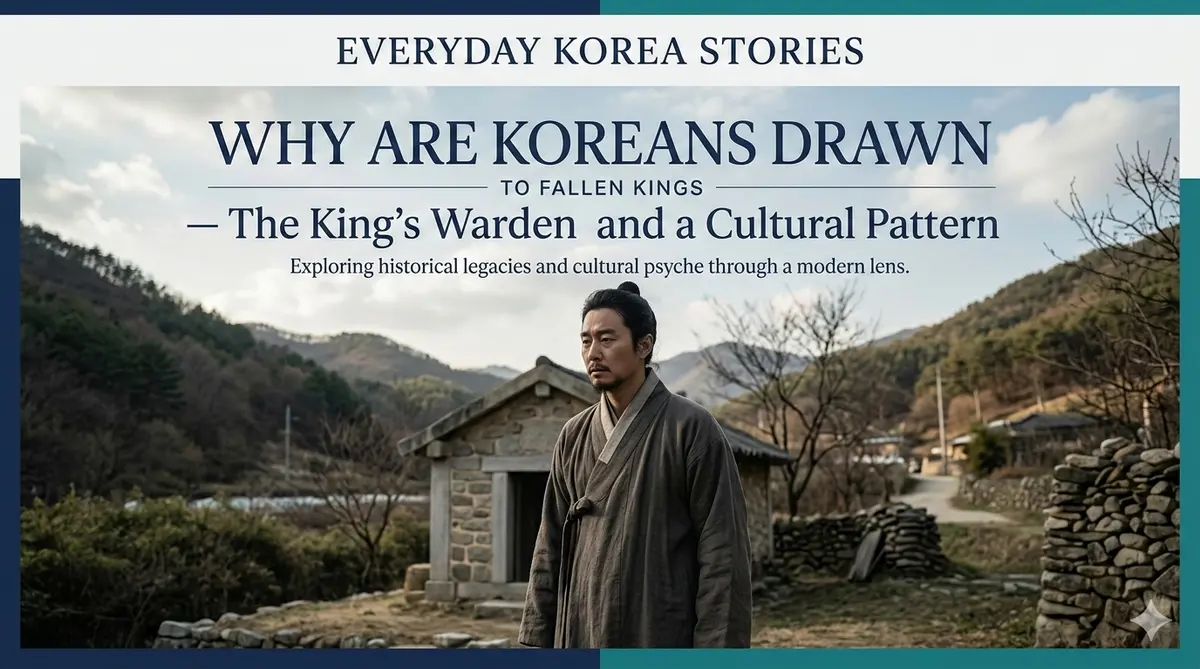
What draws viewers in is not spectacle but restraint. The king at the center of the story is no longer commanding armies or issuing decrees. He is navigating ordinary life, surrounded by people who no longer treat him as extraordinary.
This shift—from authority to anonymity—has become the film’s defining emotional core.
Online, the conversation has taken on a particular tone. On platforms like Naver blogs and community forums, viewers describe the experience less as entertainment and more as something reflective. Comments often focus on how the film “lingers” or “stays with you,” language that suggests a different kind of engagement than the typical blockbuster reaction.
Rather than debating plot twists or action sequences, audiences are discussing dignity, loss, and what it means to exist after status disappears.
How People Are Reacting
The emotional response surrounding the film is not loud or explosive. It is steady and introspective.
In cafés, where students and office workers often gather after work, conversations about the film tend to drift toward its atmosphere rather than its storyline. People talk about how “quiet” it feels, how “heavy” certain scenes are, even when very little is happening on screen.
There is also a noticeable appreciation for performance. The phrase often used in Korean media—loosely translated as an “acting showcase of overwhelming presence”—has surfaced repeatedly. It reflects not just technical skill but the ability of an actor to fully inhabit a character to the point where the performance itself becomes the center of gravity.
This kind of response reveals something about audience expectations. Korean viewers are not simply looking for narrative resolution. They are attentive to emotional authenticity, even when that authenticity is uncomfortable.
At the same time, the film’s popularity is spreading beyond Korea. Its North American release has introduced international audiences to a style of historical storytelling that feels markedly different from the more familiar Western approach.
For some viewers abroad, the absence of a clear triumph or redemption arc is surprising. Yet for Korean audiences, this narrative choice feels almost intuitive.
What This Reveals About Korean Society
To understand why a story like this resonates, it helps to look at how history is often remembered and retold in Korea.
Korean historical narratives frequently emphasize not just moments of power, but moments of vulnerability. Figures who experienced loss, exile, or downfall are not simply treated as tragic footnotes. They are often placed at the center of reflection.
This perspective shapes how stories are told. Instead of focusing solely on what someone achieved, there is a parallel interest in what they endured.
In everyday life, this sensibility appears in subtle ways. It can be seen in how people talk about personal setbacks, career transitions, or social pressures. There is an underlying recognition that identity is not fixed to a single moment of success.
The deposed king in *The King’s Warden* becomes a kind of symbolic figure within this framework. His loss of power does not erase his humanity. If anything, it reveals it more clearly.
This emphasis on the “after” rather than the “before” distinguishes many Korean narratives. The story does not end when the throne is lost. In some ways, that is when the story truly begins.
The Role of Environment and Everyday Detail
Part of what gives the film its impact is how closely it observes ordinary environments.
Scenes unfold in modest homes, rural landscapes, and quiet communal spaces. These settings are not just backdrops. They reinforce the sense that the king is now part of a world that operates without hierarchy.

For Korean viewers, these environments feel familiar. They echo the textures of everyday life—places where status is less visible, where routines matter more than titles.
This grounding in reality allows the story to feel less like distant history and more like something emotionally immediate.
It also aligns with a broader pattern in Korean media, where even large-scale productions often return to intimate, human-scale storytelling.
Why This May Surprise American Readers
For many American viewers, historical dramas are often associated with clear narrative arcs—rise, conflict, and resolution. Even when stories involve loss, there is usually some form of redemption or closure.
*The King’s Warden* resists that structure.
The film does not offer a satisfying return to power. It does not reframe the king as a hidden hero waiting for vindication. Instead, it stays with the discomfort of unresolved loss.
This approach can feel unfamiliar, even unsettling. Yet it also opens up a different kind of emotional engagement.
Rather than asking, “What happens next?” the film invites viewers to ask, “What does it mean to live after everything has already happened?”
This shift in perspective reflects a broader cultural difference in how narratives are shaped and consumed.
A Quiet Cultural Pattern
The popularity of *The King’s Warden* is not an isolated phenomenon. It connects to a longer tradition of Korean storytelling that values introspection over spectacle.
In bookstores, historical biographies often focus on figures who experienced exile or political downfall. In television dramas, characters frequently navigate the aftermath of major life changes rather than the moment of success itself.
This pattern suggests that Korean audiences are drawn not only to stories of achievement but to stories of endurance.
There is something quietly compelling about watching a character continue to exist without the identity that once defined them.
It reflects a recognition that life does not pause for dramatic conclusions. It continues, often in quieter and less visible ways.
Why This Moment Matters
The current response to *The King’s Warden* offers a glimpse into how Korean audiences are engaging with history, identity, and storytelling in the present moment.
It shows a preference for emotional depth over narrative resolution, for observation over spectacle.
For international viewers, it provides an opportunity to encounter a different narrative rhythm—one that values stillness and ambiguity.
And for Korean audiences, it reinforces a familiar but often unspoken perspective: that there is meaning not only in moments of power, but in what follows after power is gone.
In the end, the film’s success is not just about its story. It is about the way that story aligns with how people already understand the world around them.
Even in a fast-moving, highly modern society, there remains a quiet space for reflection—for stories that do not rush toward conclusions, but instead sit with the complexities of what it means to simply continue.
Frequently Asked Questions
Q: Why are Korean audiences interested in stories about deposed or defeated kings?
Answer: These stories often highlight emotional resilience and human vulnerability rather than power. Korean storytelling traditions tend to explore what happens after loss, which resonates with audiences who value reflection and endurance.
Q: Is this type of storytelling common in Korean films and dramas?
Answer: Yes, many Korean narratives focus on character depth and emotional realism rather than clear victories. This approach can be seen across historical dramas, modern films, and even television series.
Q: As a visitor to Korea, would I notice this cultural perspective in everyday life?
Answer: You might notice it in conversations, media, and even how people talk about personal challenges. There is often an emphasis on perseverance and quiet reflection rather than celebrating only peak success.
The story unfolding around this film is not loud or dramatic. It moves quietly, much like the narrative it portrays, revealing how even in moments of stillness, a society can express something deeply characteristic about itself.