Inside a busy apartment building in Seoul, someone steps into an elevator just as the doors begin to close. Before their hand reaches the floor buttons, another hand moves first—pressing the close door button almost instantly.
The doors slide shut, and the elevator begins to move without hesitation.
To many visitors, the gesture feels slightly abrupt. It can look like impatience. But in Korea, it is something quieter and more habitual—part of how people move through shared spaces.

A Habit Built Inside High-Rise Living
In South Korea, elevators are not occasional conveniences. They are constant infrastructure.
Most urban residents live in high-rise apartment complexes. Office towers, shopping malls, and subway stations all depend on elevators moving continuously throughout the day. Hundreds of people share the same system, often within a single building.
In that setting, even small pauses begin to stand out.
Waiting a few extra seconds for doors to close may seem insignificant in isolation. But when repeated dozens of times a day, those moments accumulate into something people begin to notice—and quietly adjust.
Pressing the close button becomes one of those adjustments.
The Worn-Out Button
If you look closely at older apartment elevators in Korea, there is a small detail that appears again and again.
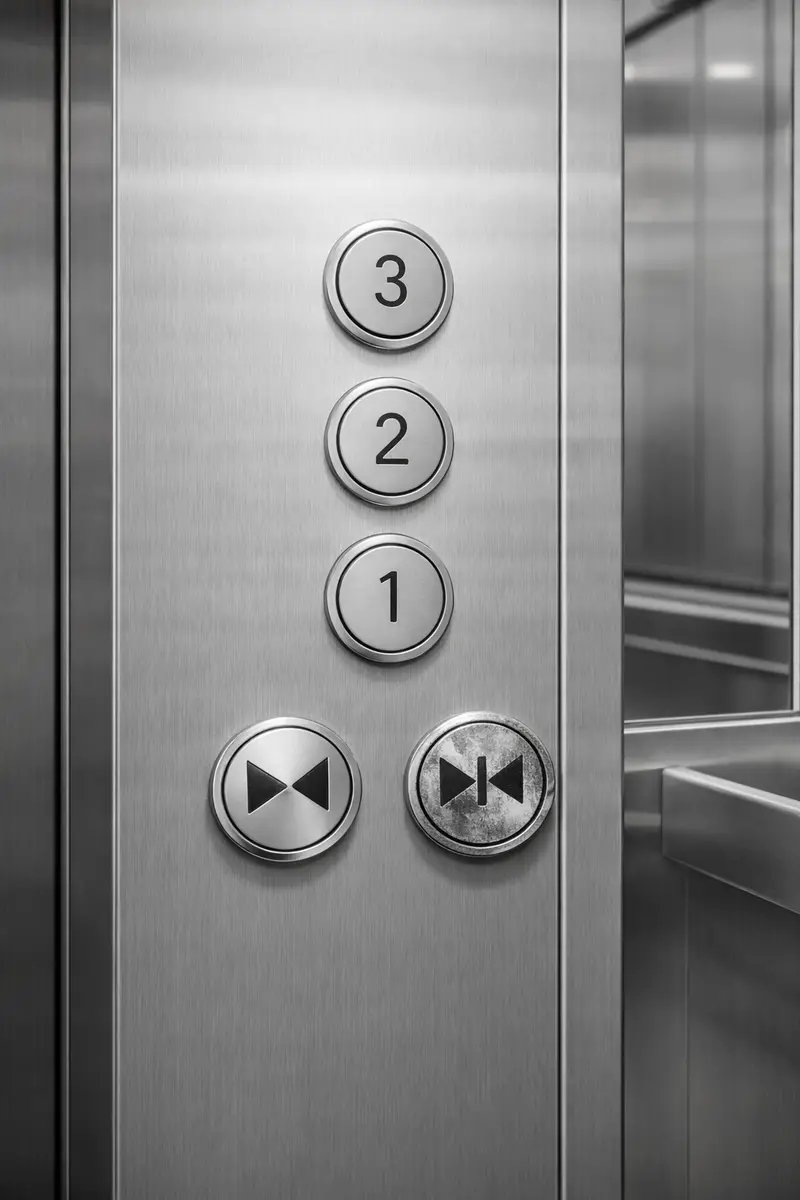
The close door button often looks different from the others.
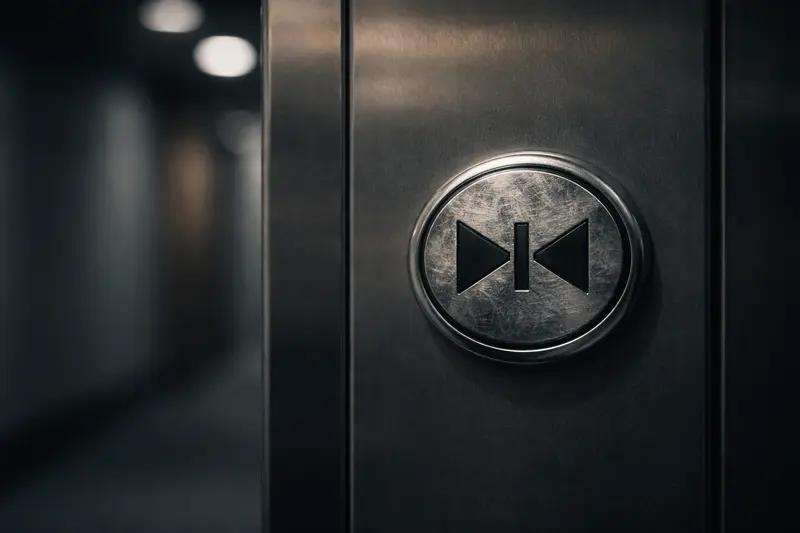
Its paint is faded. The symbol is partially worn away. Sometimes it is the only button on the panel that shows visible use.
It’s not an intentional design feature. It’s a record of behavior.
Over time, countless fingers have pressed the same spot, turning a small habit into a physical trace. The elevator panel quietly documents how often that button is used—far more than any other.
Efficiency as a Reflex
The speed of the motion is what stands out.
People do not usually think about whether to press the button. The action happens almost automatically, as part of entering the elevator. It feels less like a decision and more like muscle memory.
This reflects a broader pattern in Korean urban life.
There is a tendency to reduce small, unnecessary waiting moments—not through large changes, but through tiny, repeated actions that keep things moving.
The Same Pattern in Other Moments
Once you notice it, the same instinct appears elsewhere.
At vending machines, some people reach in early and hold their cup while the drink fills, instead of waiting for the machine to finish. On escalators, many continue walking rather than standing still.
The goal is not always to save measurable time.
It is to avoid passively waiting.
Safety Still Comes First
Despite how quickly people press the close button, the system itself is designed with safety in mind.
Korean elevators are equipped with sensitive sensors that detect movement near the doors. If someone approaches while the doors are closing, they reopen immediately. The system overrides the button without hesitation.
This is important.
The habit of pressing the close button operates within a system that prevents it from becoming dangerous. People may try to move things along, but the technology ensures that safety is not compromised.
The result is a balance: efficiency shaped by behavior, bounded by design.
Dense Cities Shape Small Behaviors
Korean cities are dense, and that density shapes how people interact with shared systems.
Elevators are one of the most frequently used pieces of infrastructure in daily life. They serve hundreds of residents, all moving at slightly different times, all sharing the same vertical space.
Over time, people develop small ways to keep that system flowing.
Pressing the close button is one of the simplest.
It doesn’t change the system itself. But it changes how the system feels—slightly faster, slightly more responsive, slightly more in sync with the pace of the city.
Small Actions, Visible Patterns
What makes this habit interesting is how small it is.
A single button press, repeated thousands of times across buildings and cities, leaves behind visible traces—on elevator panels, in shared routines, in the rhythm of daily life.
The doors would close on their own.
But someone presses the button anyway.
Not out of urgency, but because it feels natural within the system they live in.
—
Frequently Asked Questions
Q: Why do many Koreans press the elevator close button immediately?
Answer: In high-rise environments where elevators are used constantly, small delays become noticeable. Pressing the button becomes a natural habit that helps maintain flow rather than a sign of impatience.
Q: Is it safe to press the close button so quickly?
Answer: Yes. Korean elevators are equipped with sensitive safety sensors that detect movement near the doors. Even if someone presses the button, the doors will reopen immediately if a person approaches.
Q: Would visitors notice this behavior easily?
Answer: Very likely. In apartment buildings, offices, and shopping centers, the quick press of the close button is common enough that it often stands out to first-time visitors.