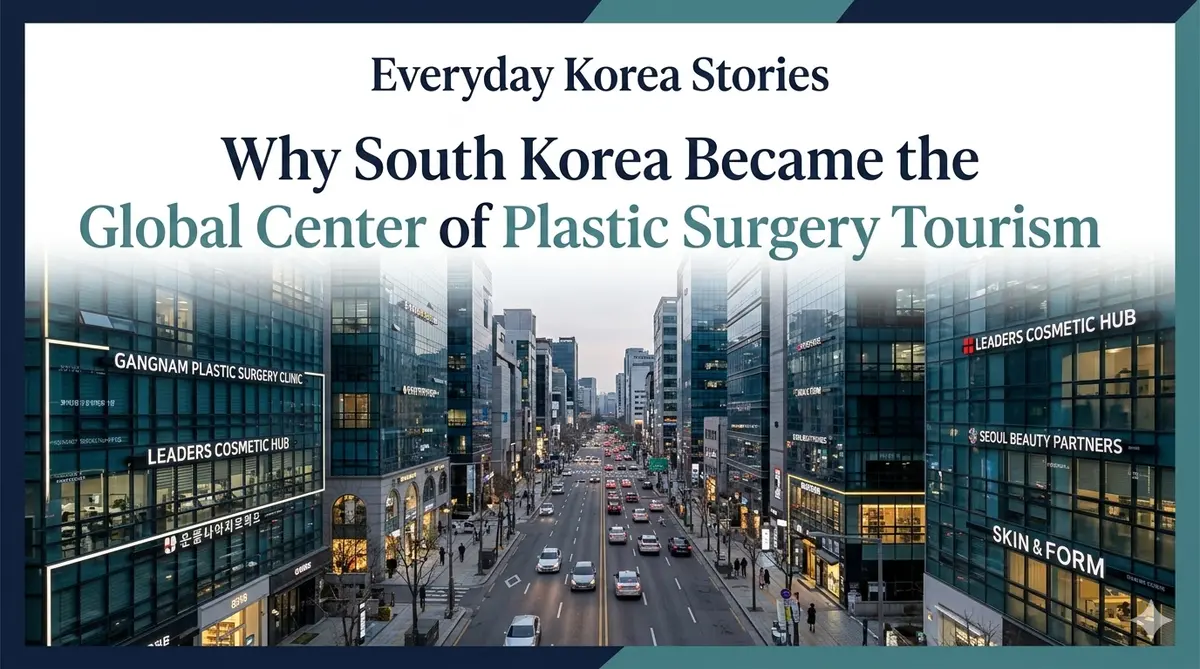
On a wide street in Seoul’s Gangnam district, people step in and out of glass-front buildings with quiet purpose. Some carry small folders from consultations. Others wear sunglasses indoors, moving carefully, as if trying not to be noticed. Upstairs, behind polished doors, consultations are happening in multiple languages at once.
For many visitors, this is not just another part of the city. It is the destination.
How Cosmetic Surgery Became So Common in Korea
In South Korea, cosmetic procedures are not confined to celebrities or public figures. They exist within the flow of everyday life.
It is not unusual for young adults to consider a procedure before entering the job market. Conversations about skin treatments or minor adjustments can happen casually among friends. In some families, certain procedures are even treated as milestone gifts, marking transitions like graduation.
Over time, this normalization created something larger than a trend.
It built an ecosystem.
Specialized clinics began to cluster. Dermatology centers expanded alongside them. Research and technology followed demand. Beauty became not just a preference, but a structured industry supported by expertise and repetition.
Why International Patients Travel to Korea
From the outside, what draws international visitors is not just the procedures themselves, but the system surrounding them.
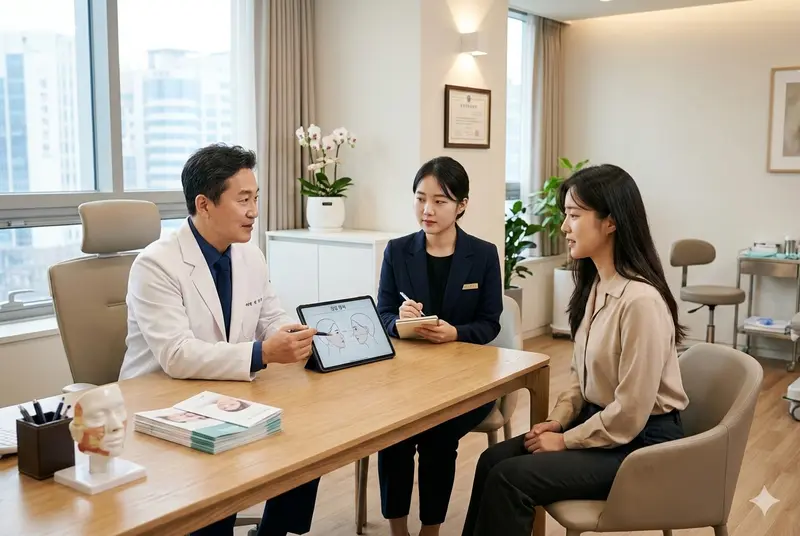
Korean surgeons often perform a high volume of specific procedures. This repetition allows clinics to refine techniques in a focused way. Over time, certain clinics become known for particular specialties, attracting patients who are looking for that precision.
But the appeal extends beyond medical skill.
The country has quietly built a full support structure around cosmetic surgery tourism. Translation services, consultation coordinators, recovery accommodations, and even transportation are designed with international patients in mind.
The experience is structured from arrival to recovery.
Visitors often follow a predictable rhythm. They arrive, consult, undergo a procedure, and spend several days or weeks recovering before returning home. The process is contained, efficient, and carefully managed.
Gangnam: A District Built Around Aesthetic Medicine
The concentration of this industry becomes most visible in Gangnam.
Entire streets are lined with clinics. Buildings stack multiple practices floor by floor, each offering variations of similar procedures. Signboards often appear in several languages, reflecting the international flow of patients moving through the area.
For someone walking through the neighborhood for the first time, the density is striking.
It does not feel like scattered businesses. It feels like a dedicated district—one shaped almost entirely by a single industry.
Over time, the area has taken on a dual identity. It functions as both a medical hub and a cultural curiosity. Even visitors with no intention of undergoing surgery often pass through, observing how visibly the industry shapes the environment.
Privacy and the “Graduation Album Problem”
Despite how visible cosmetic procedures are, privacy remains quietly important.
People may speak openly about the idea of improving appearance, but the details are often kept vague. What exactly was done, when it was done, and how much was changed—these are not always shared.
This creates small, subtle social habits.
School reunions, for example, can carry an unusual tension. Old classmates remember faces from years earlier. Casual comments about how someone has changed can feel more revealing than intended.
In that context, even something as ordinary as a school graduation album takes on a different meaning.
Graduation albums in Korea contain clear, formal portraits of every student. For someone whose appearance has changed significantly, those images can feel like records of a past version of themselves.
No one formally treats them as sensitive documents. But there is a quiet understanding.
They are not always something you leave open on the table.

A Culture That Balances Openness and Privacy
The plastic surgery industry in Korea exists in a carefully balanced space.
On one side, it is visible, discussed, and integrated into daily life. Clinics are everywhere. Advertisements are easy to find. The idea of improving appearance is widely accepted.
On the other side, personal history remains private.
This balance reflects a broader cultural pattern. Public systems can be highly visible and efficient, while individual details are handled more quietly.
The result is an environment where the industry itself is open, but individual experiences within it are often not.
Beauty, Infrastructure, and Global Movement
What began as a domestic industry has gradually expanded into something global.
Medical expertise, dense urban infrastructure, and cultural influence have combined to create a system that attracts people from around the world. The presence of Korean entertainment—films, television, music—has only amplified that interest.
Travel, in this context, takes on a different meaning.
For some visitors, the journey is not centered on sightseeing. It is centered on change—something personal, planned, and carried out within a system designed to support it.
Seoul, particularly Gangnam, becomes not just a destination, but a process.
—
Frequently Asked Questions
Q: Why do so many international patients go to South Korea for plastic surgery?
Answer: South Korea offers a dense concentration of specialized clinics and experienced surgeons, along with a well-developed support system for international patients. The combination makes procedures feel both accessible and structured.
Q: Where is the main plastic surgery district in Korea?
Answer: Gangnam in Seoul is the most well-known area. Entire streets are filled with clinics, consultation offices, and related services, creating a highly concentrated medical district.
Q: If I visit Korea, will I notice the plastic surgery industry as a tourist?
Answer: Yes, especially in Gangnam. Even without seeking treatment, visitors often notice the large number of clinics and the visible presence of the beauty industry in the area.