Right now in South Korea, something interesting is happening.
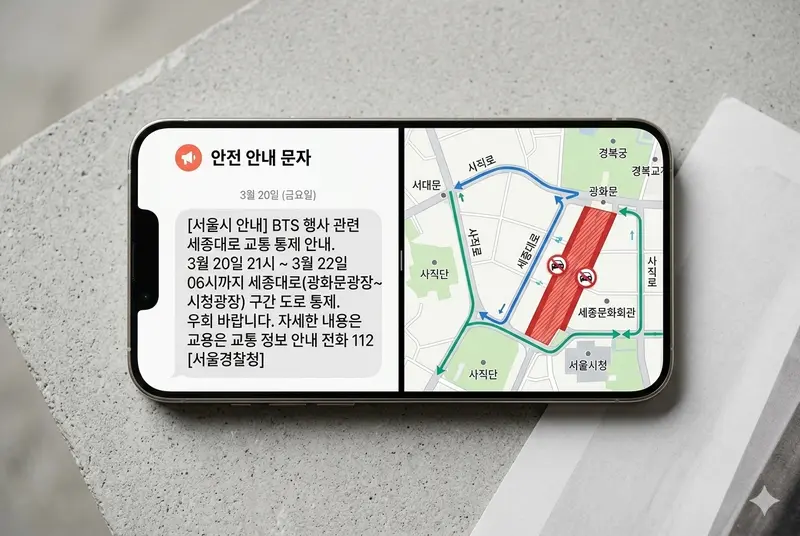
In central Seoul, a BTS-related event near Gwanghwamun didn’t just draw massive crowds. It also triggered official safety alert messages across the city, notifying residents about road closures and expected congestion—sometimes before people even knew the event was happening.
For those living or working nearby, the notification arrived as a quiet interruption. A short vibration. A message from the government. A reminder that the city was about to shift.
What Is Happening
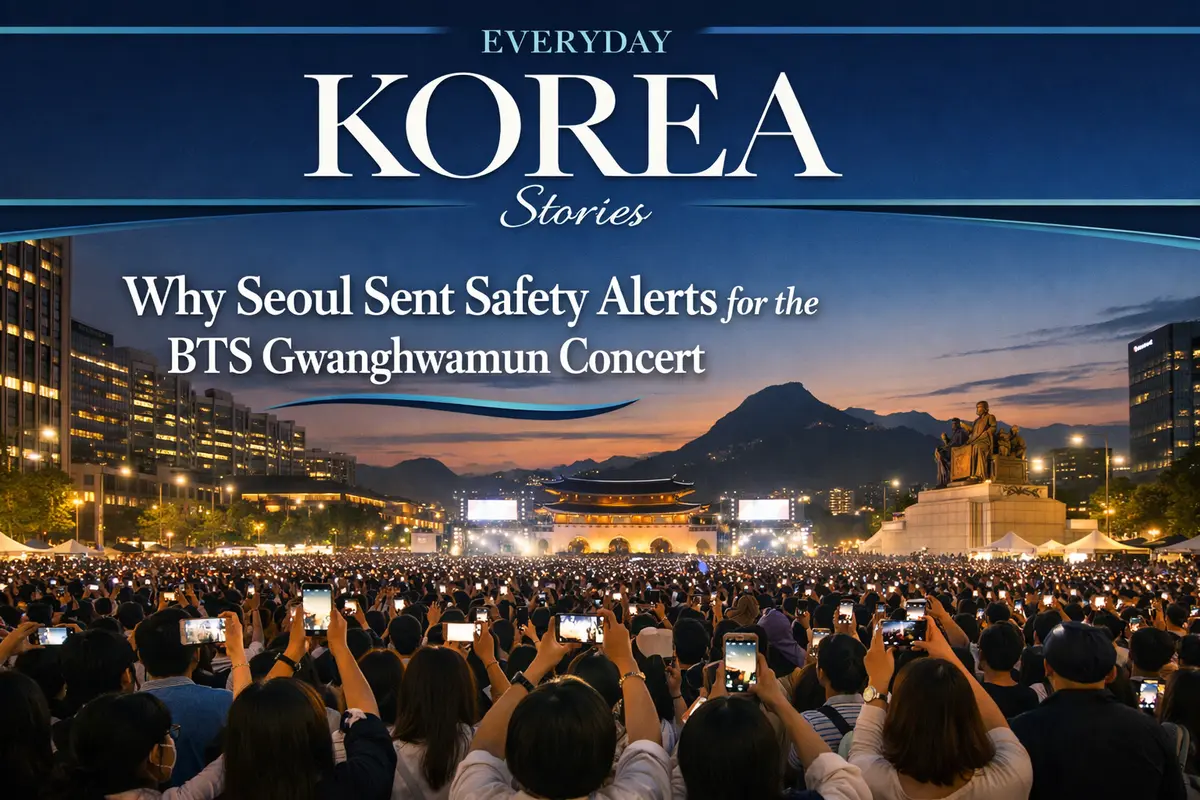
The BTS Gwanghwamun concert became more than a music event. It turned into a moment where Seoul’s urban system visibly activated.
Hours before the crowd reached its peak, smartphones across nearby districts received official alerts. The message typically included specific road names, estimated congestion zones, and advice to avoid certain areas or use alternative routes.
In a city where space is tightly shared between pedestrians, buses, taxis, and delivery vehicles, even a temporary concentration of people can disrupt the entire flow.
Gwanghwamun, in particular, is not just another venue. It sits at the center of government buildings, office districts, tourist routes, and major subway lines. When something happens there, it affects far more than the attendees.
So the alert didn’t just target fans.
It reached office workers preparing to leave for the day, drivers navigating central Seoul, and even residents several districts away who might pass through the area later.
The event itself became secondary to the movement it created.
How People Are Reacting
Inside subway cars, the reaction was subtle but immediate. Several passengers would glance down at their phones at the same moment, reading the same alert.
Some opened their navigation apps right away. Others quietly adjusted their plans.
An office worker in Jongno might delay leaving work. A delivery driver might reroute before traffic builds. A café near the area might anticipate a sudden rush of customers escaping the crowds.
These decisions happen individually, but they form a collective response.
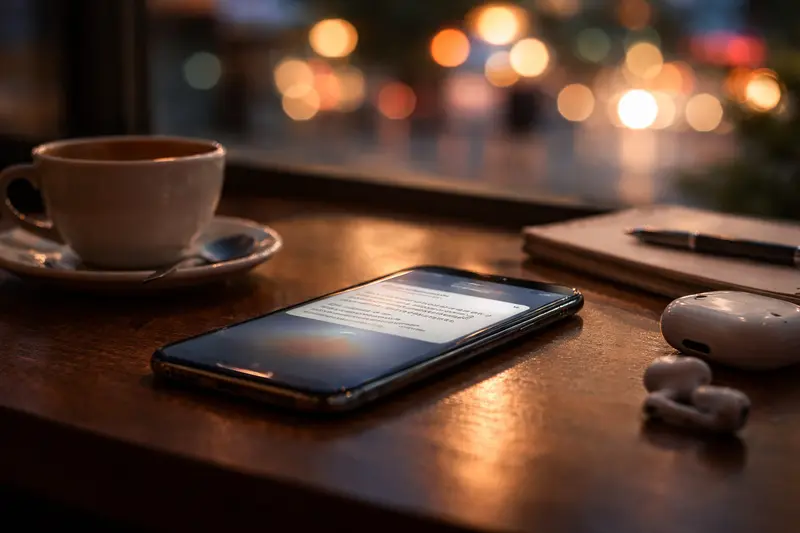
Online, the reaction takes a different shape. Screenshots of the alert quickly spread across platforms like Naver and community forums. People comment on how early the message arrived, whether it was necessary for a concert, and how severe the congestion actually became.
There’s also a layer of familiarity. Many Koreans have received similar alerts for typhoons, heavy snow, or public emergencies. Seeing one tied to a BTS event doesn’t feel entirely unusual—it feels like the system being applied to a different kind of crowd.
At the same time, not everyone welcomes it. Some users mention turning off certain alert categories in their phone settings, especially if they feel the messages arrive too frequently.
That tension—between usefulness and intrusion—is part of everyday digital life in Korea.
The System Behind the Moment
What makes this moment notable is not just that an alert was sent, but how seamlessly it fits into Seoul’s broader infrastructure.
The alert system is designed to push information outward, instantly and widely, without requiring people to actively seek it.
That changes how people experience the city.
In many places, information about large events spreads through news, social media, or simple observation. In Seoul, it arrives directly, often before the physical effects are fully visible.
A street might still look normal. Traffic may still be flowing.
But the message signals that change is coming.
That creates a different kind of awareness. People aren’t reacting to congestion after it happens. They are adjusting in anticipation of it.
And because each person makes small, independent decisions, the overall system becomes more flexible.
Why This Feels Different to American Readers
For many American readers, the idea of receiving a government alert about a concert might feel unusual.
In the United States, emergency alert systems are typically reserved for extreme situations—natural disasters, missing persons, or immediate threats. A music event, even a large one, would rarely trigger a direct notification to the public.
In Seoul, the boundary is different.
The alert is not only about danger. It’s about disruption.
A BTS concert in Gwanghwamun is treated less as entertainment and more as a temporary transformation of the city’s movement patterns.
That shift reflects how densely interconnected urban life is in Korea. A single event can ripple outward, affecting transportation, business operations, and daily routines across multiple districts.
Instead of leaving individuals to figure it out on their own, the system provides a shared piece of information at the same moment.
From there, each person decides what to do.
A City That Moves With Information
What stands out in moments like this is how quietly coordinated the city becomes.
There’s no announcement over loudspeakers telling people where to go. No visible command directing the flow.
Instead, information spreads through phones, and behavior adjusts almost invisibly.
Drivers take different routes. Pedestrians slow down or change direction. Businesses prepare for shifts in foot traffic.
Even those who ignore the alert are still part of the system, because others have already adapted around them.
Over time, this creates a rhythm.
The city doesn’t stop for large events. It reshapes itself around them.
The Quiet Normality of It All
Perhaps the most striking part of the BTS Gwanghwamun alert is how unremarkable it feels to locals.
There is no sense of urgency or panic. The message arrives, people read it, and life continues—with slight adjustments.
A subway ride might be a little more crowded. A walk home might take a different route. A meeting might start a few minutes later.
None of these changes are dramatic on their own.
But together, they show how a city can operate when information is constantly flowing between systems and individuals.
In Seoul, even a concert becomes part of that flow.
Not just something to attend, but something the entire city quietly adjusts around, one notification at a time.
Frequently Asked Questions
Q: Why would a concert trigger a government safety alert in Seoul?
Answer: Large events in central areas like Gwanghwamun can disrupt traffic, public transportation, and pedestrian flow. The alert helps residents anticipate these changes and adjust their plans before congestion peaks.
Q: Do people in Korea actually pay attention to these alerts?
Answer: Most people at least check them. Even a quick glance can influence small decisions, like changing routes or timing. Over time, this habit becomes part of how people navigate the city.
Q: As a visitor, should I be concerned if I receive one of these alerts?
Answer: Not necessarily. Many alerts are informational rather than urgent. They are meant to help you avoid inconvenience, not signal danger, so it’s usually enough to read the message and adjust if needed.