For years, South Korea’s traditional public bathhouses seemed headed toward quiet decline. Many younger people viewed them as relics associated with older generations — practical, inexpensive, but culturally outdated. Then something unexpected began happening. Young adults started returning.
Not for hygiene. Not out of nostalgia.
They came for recovery, social space, and something increasingly difficult to find elsewhere: temporary disconnection from modern life.
Across Seoul and other cities, jjimjilbangs — Korea’s communal sauna complexes — are being rediscovered by people in their twenties and thirties. What looks like a revival of tradition is actually something different: a reinterpretation of wellness shaped by burnout, economic pressure, and digital fatigue.
The Shift: From Bathhouse to Recovery Space
A traditional Korean sauna, or jjimjilbang, historically served practical purposes. Families visited together, travelers slept overnight, and workers used them as affordable bathing facilities.
Today’s younger visitors are arriving with entirely different expectations.
They are seeking:
– mental reset rather than cleanliness
– quiet social interaction instead of nightlife
– affordable self-care alternatives
– screen-free environments
The transformation is subtle but meaningful. The same heated rooms and resting floors now function less as hygiene infrastructure and more as emotional recovery environments.
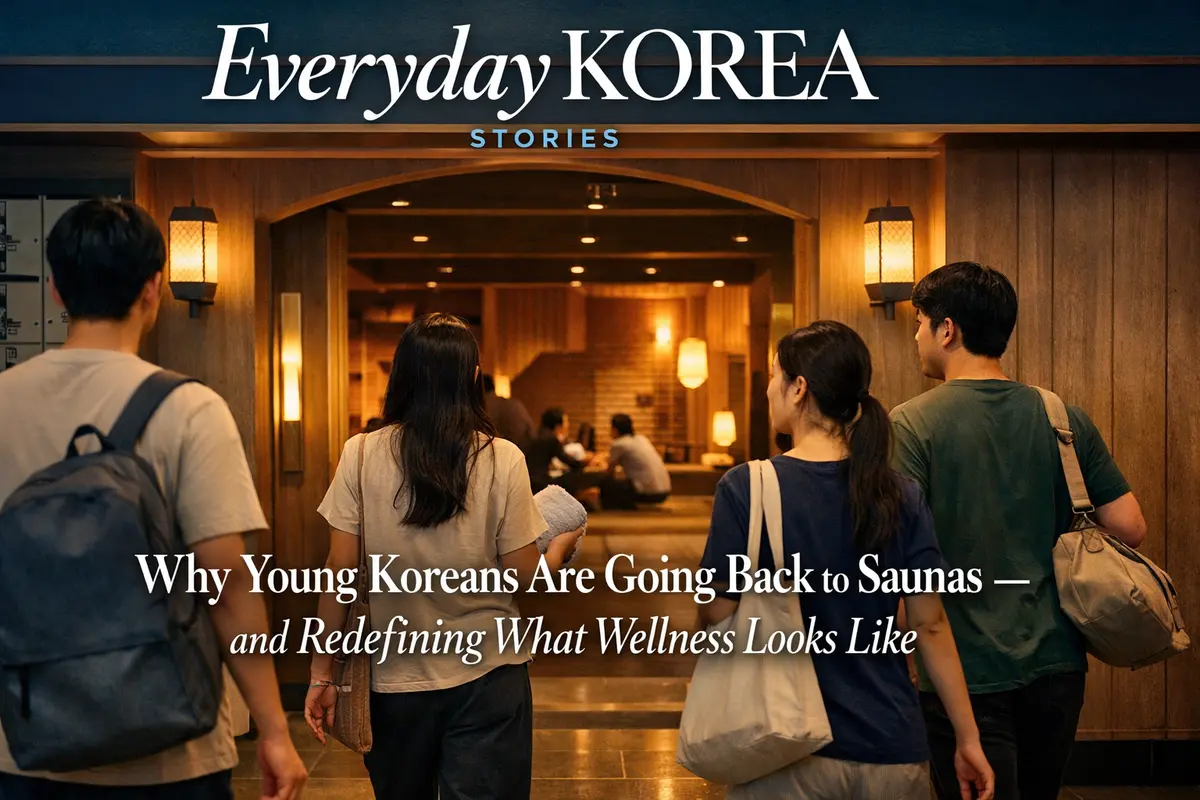
In some neighborhoods, it’s increasingly common to see young visitors entering with small tote bags and comfortable clothing, planning to stay for hours rather than stopping briefly to wash.
Why Now? Burnout Without Expensive Solutions
South Korea’s younger generation faces familiar pressures: long working hours, rising living costs, and constant digital connectivity.
Wellness culture exists, but many options — boutique fitness studios, therapy apps, retreats — remain expensive or individualistic.
Jjimjilbangs offer something rare: low-cost recovery without performance expectations.
For the price of a casual meal, visitors gain access to heated rooms, resting spaces, communal lounges, and often sleeping areas.
No branding. No optimization mindset.
Younger visitors increasingly describe sauna visits using language like “resetting” or “recharging,” terms once associated with vacations rather than everyday routines.
Wellness becomes ordinary.
Digital Detox Without Calling It Detox
Interestingly, most young visitors do not explicitly describe sauna trips as digital detox experiences.
Yet the environment naturally creates one.
Phones overheat. Lighting is soft. Conversations slow down.
Without formal rules, behavior changes.
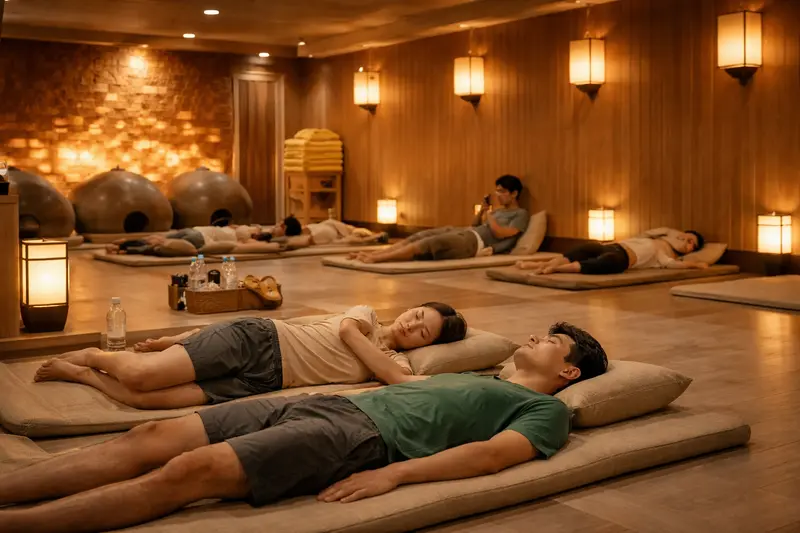
In resting halls, people lie quietly under blankets, moving between short conversations and long silence — a rhythm rarely found in modern urban spaces.
The absence of pressure becomes the attraction.
Generational Reinterpretation of Tradition
Older Koreans often associate bathhouses with routine hygiene.
Younger visitors reinterpret the same space through emotional needs.
A sauna room becomes:
– meditation without instruction
– therapy without structure
– community without obligation
The infrastructure remains the same.
The meaning changes.
Instead of nostalgia, this is adaptation.
Affordable Wellness as a Cultural Signal
Globally, wellness has become associated with premium pricing.
Korea’s sauna resurgence suggests another model: low-cost communal wellness.
Key features include:
– minimal planning
– no brand identity required
– shared but non-intrusive environments
– flexible time use
Instead of optimizing self-improvement, people step outside optimization altogether.
That distinction matters.
Socializing Without Performance
Saunas offer something increasingly rare.
Social presence without social performance.
No dress code. No expectation to document. Silence is normal.
Some young adults even replace café meetups with sauna visits.
In a culture where many spaces encourage visibility, jjimjilbangs quietly reverse that logic.
The Role of Exhaustion in Lifestyle Change
The trend also reflects a broader condition: constant low-level exhaustion.
Major solutions like travel or lifestyle changes are not always practical.
Saunas provide micro-recovery.
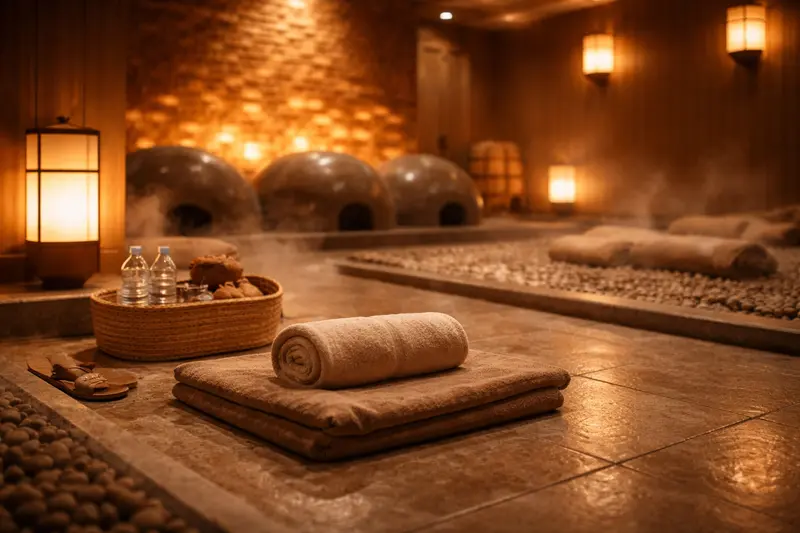
A few hours of heat, rest, and stillness can reset both body and mind.
In dense Korean cities, these spaces are easy to access — allowing recovery to become part of routine rather than exception.
Why This Matters Beyond Korea
For global observers, this trend suggests a shift in how wellness may evolve.
As economic pressure increases, high-cost self-care may become less sustainable.
Instead, people may seek:
– communal relaxation spaces
– non-branded environments
– analog social experiences
– slow-time zones inside fast cities
Korea often reveals these patterns early.
Old infrastructure gains new meaning when cultural needs change.
Practical Understanding for Visitors
Visitors often misunderstand jjimjilbang as a tourist attraction.
In reality, it works best as ordinary time.
A few practical insights:
– visits often last several hours
– quiet rest is normal
– people alternate between heat and rest repeatedly
Understanding this rhythm makes the experience intuitive.
—
Frequently Asked Questions
Q: If I visit a Korean sauna, what will people actually be doing there?
Answer: Most people are not actively bathing the entire time. They move between heated rooms and resting areas, lie down, talk quietly, or simply relax for long periods.
Q: Why are younger Koreans interested in jjimjilbangs again?
Answer: They offer affordable recovery and a break from constant digital activity. Unlike structured wellness programs, they require no planning or performance.
Q: Is going to a jjimjilbang considered a special activity?
Answer: Not really. For many people, it functions as an everyday option for rest — similar to going to a café, but slower and more restorative.