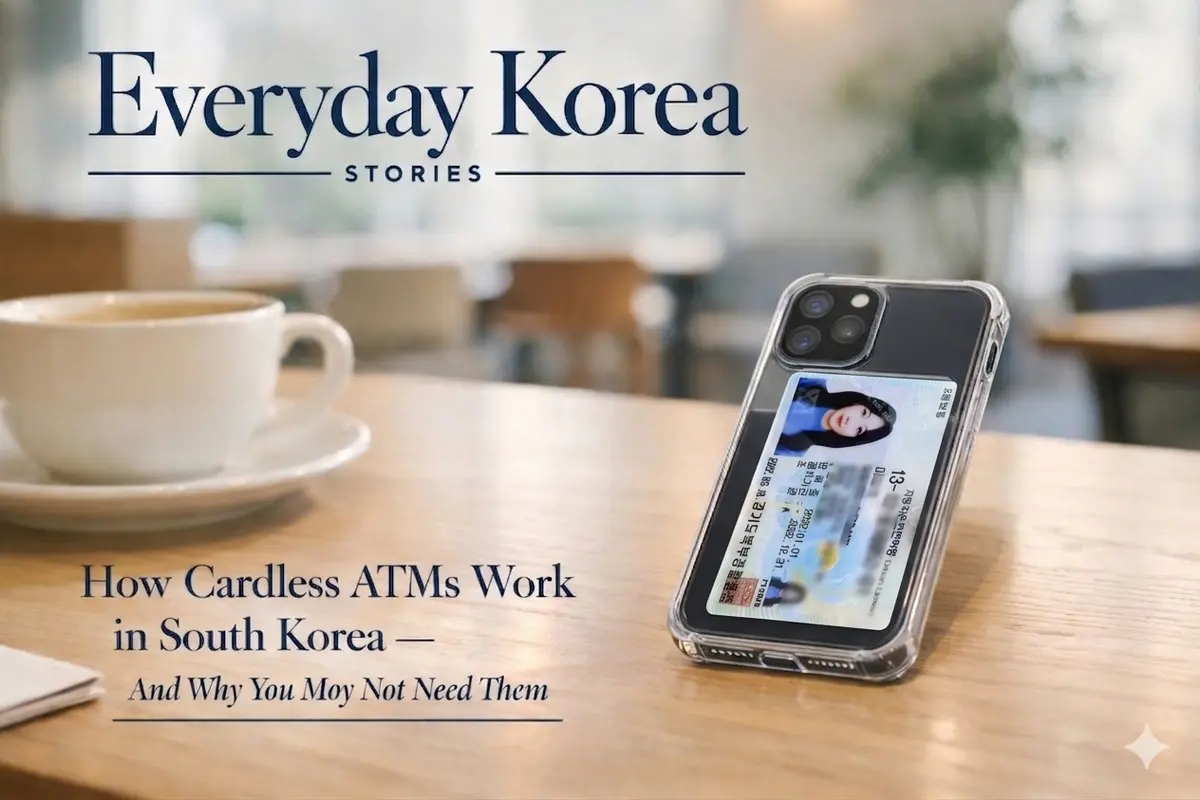
A phone rests on a café table in Seoul.
No wallet. No stack of cards. Just a transparent case, slightly worn, with a single card tucked inside. Not a credit card — an ID. The kind of detail you might miss unless you’re looking for it.
Around the table, people pay without reaching for anything else. A tap, a scan, a short vibration. The transaction is already done.
The absence of a wallet doesn’t feel like a statement. It feels normal.
The Idea of a “Cardless ATM” — And Why It Sounds Unusual
In many countries, withdrawing cash still begins with a familiar ritual. You insert a card, enter a PIN, and wait for the machine to respond.
The idea of a “cardless ATM” disrupts that expectation. No physical card. No plastic at all. Just a phone — and sometimes not even that, depending on how the system is set up.
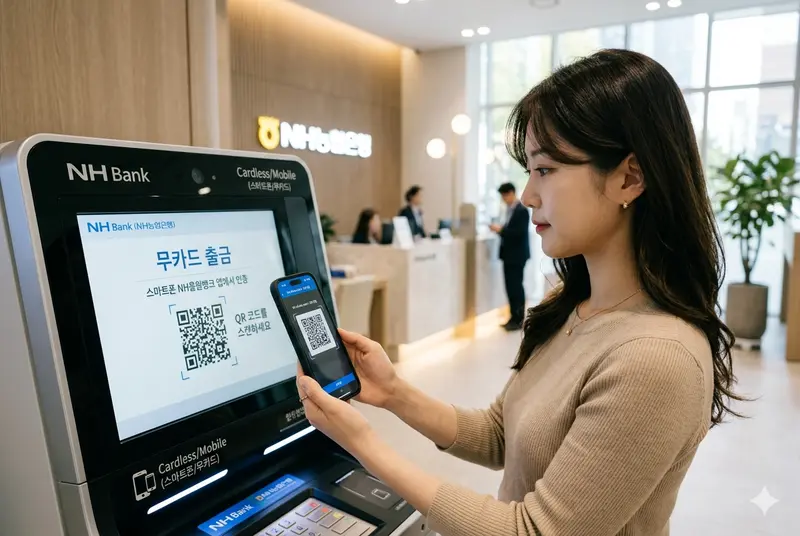
In South Korea, several banks allow users to withdraw cash through mobile authentication. A banking app generates a one-time code or QR-based authorization. The ATM recognizes the request, and the transaction completes without a card ever entering the machine.
At first glance, this feels like a technological upgrade — a small step forward in convenience.
But the more you look at it, the more it raises a different question:
If you can withdraw cash without a card, how often do you still need cash at all?
When Withdrawing Cash Stops Being a Daily Habit
The presence of cardless ATMs suggests innovation. The behavior around them suggests something else entirely.
In South Korea, cash has been quietly fading from everyday use. Not disappearing, but receding — becoming situational rather than default.
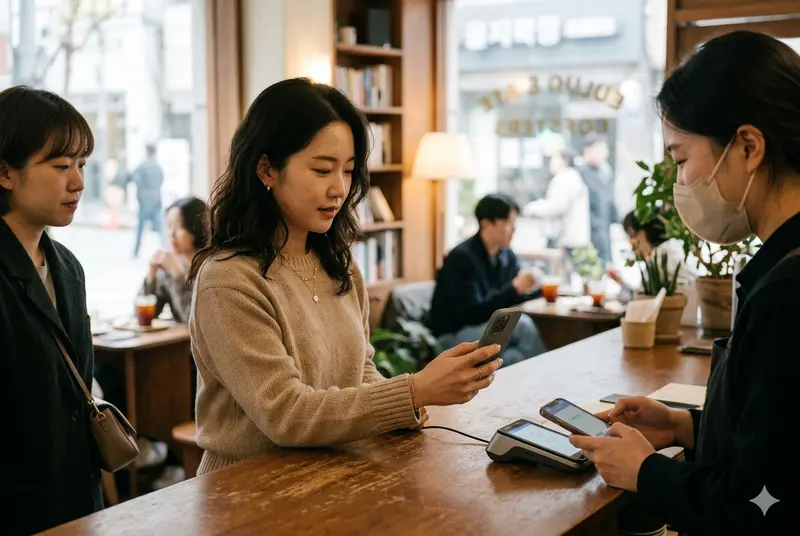
A coffee shop accepts mobile payments. A taxi ride is settled through an app. Splitting a bill happens instantly through account transfers. Even small, informal transactions — the kind that once required exact bills — are now handled digitally.
It’s not that cash is gone. It’s that reaching for it no longer feels necessary.
This shift changes the role of the ATM itself. It is no longer a routine stop in daily life. It becomes something occasional — a tool you use when a specific situation calls for it.
And when that happens, even the card you once needed for that process begins to feel optional.
From Cards to Phones — And Beyond
Mobile payment systems in South Korea have reached a level of integration where the physical card is no longer the center of financial interaction.
Services like Samsung Pay and KakaoPay allow users to pay in stores, online, and even between individuals without ever presenting a card.
The phone becomes the interface. Authentication replaces possession.
This is a subtle but important transition.
A card is an object you carry. A phone is an object you live through.
Once payments move into the phone, other systems begin to follow. Identification becomes digital. Tickets, memberships, and verification processes shift into apps. The number of things you need to physically carry starts to shrink.
The result is not just convenience. It’s a redefinition of what “having access” means.
The Wallet Doesn’t Disappear — It Shrinks
The transparent phone case with a single card inside is not just a minimalist aesthetic. It’s a transitional form.
It tells you that the wallet hasn’t vanished. It has been compressed.
Instead of carrying multiple cards — credit, debit, ID, transit — many people reduce everything down to one essential item. Often that item isn’t even used daily. It’s there as a backup, not a primary tool.
The rest has already moved elsewhere.
This is where the idea of a “wallet-free lifestyle” becomes tangible. It’s not about eliminating objects entirely. It’s about reducing reliance on them to the point where they fade into the background.
Why This Feels Different to American Users
For many American users, financial interactions are still anchored to physical objects.
Cards remain central. Cash is still a fallback in many everyday situations. Even digital payments often sit on top of a card-based system.
So the idea of not carrying a wallet — or needing one only occasionally — can feel incomplete, even risky.
In South Korea, the infrastructure supports a different assumption.
Transactions are fast, widely accepted, and deeply integrated into daily routines. Mobile authentication is familiar. Trust in digital systems is reinforced through repetition.
The difference isn’t just technological. It’s behavioral.
What feels like a leap in one system feels like a small step in another.
Cardless ATMs as a Transitional Signal
Seen in isolation, cardless ATMs look like an innovation.
Seen in context, they look like a bridge.
They exist in a moment where physical cards are becoming less necessary, but cash has not entirely disappeared. They provide flexibility — a way to access money without depending on older habits.
But their long-term significance may not lie in how often they are used.
It lies in what they reveal.
A system that allows you to withdraw cash without a card is already preparing for a world where both might matter less.
A Small Scene That Explains a Bigger Shift
Back at the café, the phone remains on the table.
No one checks a wallet. No one counts bills. Payments happen quietly, almost invisibly.
The single card in the phone case stays untouched.
It’s there — but it’s no longer central.
And that may be the most telling detail of all.
Frequently Asked Questions
Q: Do you really not need cash in South Korea?
Answer: In most everyday situations, cash is not necessary. Cafés, restaurants, transportation, and even small shops widely accept mobile payments or cards. However, some traditional markets or specific situations may still prefer cash.
Q: How do cardless ATMs actually work in Korea?
Answer: Users typically initiate a withdrawal through a banking app, which generates a one-time code or authentication method. At the ATM, they enter or scan this information to complete the transaction without inserting a card.
Q: Is it difficult for foreigners to adapt to this system?
Answer: It can feel unfamiliar at first, especially if you rely on cash or physical cards. However, many places still accept international cards, and once you use mobile payments, the system becomes surprisingly easy to navigate.